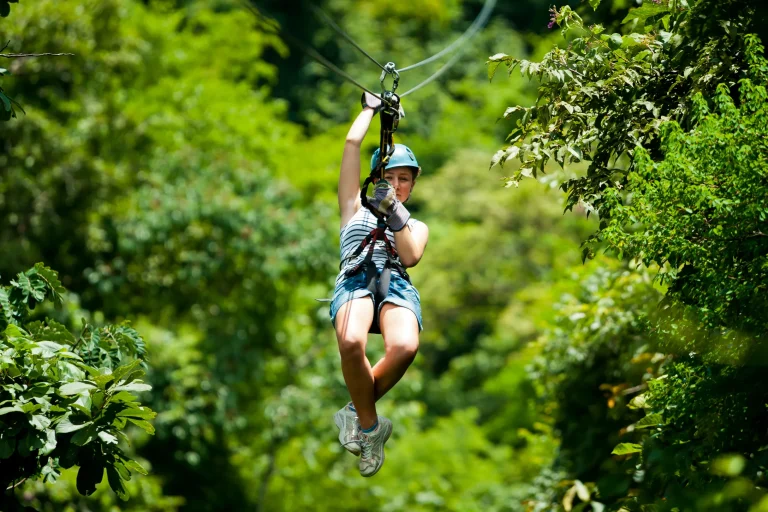
Warm air sticks to your arms as the metal platform radiates heat under your shoes and the jungle hums with cicadas. You’ll love the speed and the views on the North Shore, but summer makes timing and prep matter. Book a 7:30 to 9:30 AM launch or a sunset slot for cooler air and softer light. Drink water before you clip in, add electrolytes if you sweat fast, and apply bug spray early. Now, what happens when the sun climbs mid tour?
Key Takeaways
- Book a morning start (7:30–9:30 AM) or sunset ride (5:30–7:30 PM) for cooler air and less glare.
- Expect 85–90°F heat with 60–80% humidity; platforms and short sun patches can feel much hotter than the forest.
- Pre-hydrate 16–20 oz before check-in, then sip 6–8 oz every 20–30 minutes; add electrolytes if sweating heavily.
- Pace yourself between lines: rest 5–10 minutes in shade, breathe steadily, and stop 15–20 minutes if dizzy or nauseous.
- Wear moisture-wicking fitted layers, long shorts/capris, and closed-toe trail shoes; secure sunglasses and avoid baggy clothing or open-heel footwear.
North Shore Ziplining in Summer: Quick Game Plan
If you can roll in before 10 AM, you’ll catch the North Shore course while the air still feels light and the heat hasn’t settled in yet, even though summer days often climb to 85–90°F (29–32°C). Dress in a moisture-wicking top and capris or long pants so the harness doesn’t rub when you’re zip lining for 2 to 3 hours.
Bring a refillable bottle and sip often, then top off at water stations and add electrolytes if you’re sweating hard. Be sure to apply sunscreen that’s reef-safe and dab on repellent before you arrive, but don’t spray near your helmet or straps. Even in summer, check the forecast because most tours run through light rain under weather policies, but lightning can still mean delays or cancellations. Pace the little climbs, take shade breaks, and skip pre-tour alcohol. Stay cool and listen for the jungle birds between zips today.
Book North Shore Ziplining for Cooler Hours
Lock in a morning start around 7:30 to 8:30 AM and you’ll feel the air stay 5 to 10°F cooler while birds chatter over the lines. Skip the midday window from about 11 AM to 4 PM because the platforms can feel like a warm frying pan under the sun. If you can swing a 4:30 to 6:30 PM slot, you’ll ride into softer light and deeper canopy shade that knocks the heat down a notch. This timing helps you get cooler temps and better light on the North Shore.
Choose Morning Time Slots
In the early morning, North Shore ziplining feels like you’ve slipped in before the island turns up the heat. You’ll hike in cooler air, and under the canopy it can sit 5–10°F lower than open sun. To lock it in, book the earliest morning time slot, then reserve online or call the operator’s booking line since weekends vanish fast. arrive 20–30 minutes before so you can check in, get your harness snug, and swipe on sunscreen while the breeze feels friendly. Aim to arrive early enough to handle parking without rushing before check-in. Morning runs cut down bugs and glare, yet help keep your focus on the zip’s whistle and the scent around you.
- Pack water you can sip between platforms
- Wear layers that breathe
- Listen for birds waking up above the cables
Avoid Midday Peak Heat
Because the North Shore sun hits its stride between about 11:00 AM and 3:00 PM, you’ll have a better time on the line when you book outside that peak heat window. Plan to book morning or late-afternoon tours so you’re not baking in a helmet and harness while the UV index climbs.
Aim for early-morning zipline slots before 9:30 AM. You’ll often feel temps 5 to 10°F cooler and trade winds stay calmer, so sweat doesn’t pool under your straps. If you can’t avoid noon, schedule midday water breaks, sip an electrolyte drink, and wear moisture-wicking sun gear. Bring something to do during platform waiting time so you’re not standing in the sun longer than necessary. Confirm start times and show up 20 to 30 minutes early. That buffer can keep you in the cooler group and off the hottest platform today.
Still comparing North Shore Ziplining In Summer: Heat Tips And What To Expect?
Ask for tour ideas, hotel suggestions, or a simple trip plan that combines both.
Trip Helper
Sunset Rides And Shade
If you can snag a sunset zipline slot, you’ll trade the sharp midday glare for cooler air and longer shade under the canopy. Summer evenings run about 5:30–7:30 PM, and the North Shore often drops 5–10°F after sundown. Sea breezes slip in, so moisture-wicking tops and light long sleeves feel just right. You’ll see the sun glaze the ridgeline and hear ropes hum as you glide into shadowy gulches with fewer crowds.
Plan for:
- Reserve early online or call, because weekend slots vanish fast.
- If you’re booking late, use same-day and next-day tips to snag openings when sunset tours look full.
- Apply sunscreen before you arrive, even in golden hour.
- Pack a headlamp or use phone night mode for platform steps.
When you reserve bringing a light layer, you’ll enjoy the hush of trees as temps dip after the last ride.
North Shore Ziplining Heat: What It Feels Like
On a North Shore summer day, the sun on open platforms feels like a warm spotlight, and the humid air sticks to your skin while you wait for your turn. You’ll zip into canopy shade that’s a few degrees cooler and hear the leaves rush past, but you’ll still sweat fast and feel your helmet padding and harness straps cling and creep. Following a solid packing list helps you stay ahead of the heat with essentials like water and sun protection. You can stay comfortable by wearing moisture-wicking clothes and a headband, then pausing for quick gear tweaks, water and electrolytes, and a fresh swipe of sunscreen before the next launch.
Sun Vs. Canopy Shade
Often, the first surprise on a North Shore zipline is how much sun sneaks through the trees. You’ll glide from cool green shade into bright patches that feel like a spotlight, and the UV can match open beach conditions. Put on sunscreen before you clip in, even if the forest looks thick. Shade does drop the felt temperature a few degrees, especially early or late in the day, but midday light warms platforms fast. If you’re feeling uneasy about the heat or exposure, experienced guides offer comfort from guides with calm pacing and clear check-ins between runs.
- Wear moisture-wicking clothing and quick-dry shorts so you stay comfortable between runs.
- Check your helmet and harness fit each time; straps and metal can feel warm.
- Expect less breeze under the canopy, so take short pauses and drink water.
On the line, you’ll hear cicadas and see flecks flash by.
Humidity, Sweat, And Gear
Bright sun patches are only half the story, because the real North Shore heat shows up when the air turns sticky. Summer humidity sits around 60 to 80%, so your sweat won’t vanish fast, especially under a harness and helmet. Those waist, thigh, and shoulder contact points can rub. Wear close-fitting, moisture-wicking tops and pants with a modest inseam so you keep range of motion. For ziplining shoes, stick with secure, closed-toe footwear that won’t slip when you’re climbing platforms or landing.
| Problem | What you feel | Quick fix |
|---|---|---|
| Sticky straps | Hot spots | Wicking layers |
| Slipping helmet | Sweat in eyes | Thin bandana |
| Platform climbs | Temp spikes | Water plus electrolytes |
| Bugs at shade | Itchy distraction | Pump bug spray, not aerosol |
Put sunscreen on before you arrive early
Hydrate Before Your North Shore Zipline Tour
Always treat hydration like your first piece of gear before you clip in. In the hour before your North Shore zipline tour, drink 16 to 20 ounces of water so you start cool and steady in the sticky air. Then keep sipping as you hike between platforms and hear the zips sing through the trees. Aim for 6 to 8 ounces every 20 to 30 minutes. Plan to arrive early for check-in and waivers so you have buffer time to hydrate without rushing.
Hydration is your first piece of gear, drink 16–20 ounces before, then sip 6–8 ounces every 20–30 minutes.
- Make sure you skip alcohol and go easy on caffeine for 12 to 24 hours.
- If it’s above 85 to 90°F or you’re sweating hard, add an electrolyte drink to help keep salts balanced.
- We recommend bringing an insulated refillable bottle and topping off at refill stations or asking staff for cold water stops.
Stay sharp and enjoy.
North Shore Ziplining Outfit: A Simple Formula
You’ll feel the North Shore heat and the hum of the pulley fast, so start with breathable, close-fitting layers that won’t rub under a harness. You’ll move better in long shorts, capris, or light pants, and you’ll want closed-toe tennis shoes tied tight for steady steps on platforms and short climbs. Most tours provide essentials like helmets and gloves, so focus your packing on personal comfort items and weather protection instead of bulky gear. Finish with small accessories that play nice with your helmet, like a slim headband and sunscreen applied before you arrive, because nobody wants to fog up their goggles with bug spray.
Breathable, Chafe-Free Layers
Because the North Shore heat can turn a fun ride into a sticky slog, your best ziplining outfit follows a simple rule: breathe, cover, and stay put under the harness. Pick a close-fitting moisture-wicking top in synthetic or merino. Sleeves that cover your shoulders help stop harness rub while you listen to cables sing. Choose long, lightweight hiking pants or capris with a modest inseam so the leg loops don’t creep. If you insist on shorts, avoid short shorts and go for a built-in liner. Skip flip flops too, sure, but the bigger win is fabric that stays put. Add a sweatband or bandana under your helmet to wick sweat away from your eyes. If anything feels pinchy, numb, or overly loose once you’re clipped in, speak up and ask for a harness fit check before you launch.
- Snug wicking sleeves
- Light pants or capris
- Sweatband under helmet
Closed-Toe Shoes And Accessories
Most days, the make-or-break detail on a North Shore zipline isn’t your shirt, it’s your shoes. Choose closed-toe, closed-heel athletic shoes and tie them snug. You’ll climb rough wooden stairs, step onto metal platforms, and land with a little thump, so stable footing matters. Show up in sandals, flip-flops, Crocs, or anything loose and the outfitter can turn you away, no debate. Prioritize shoes with grip and traction, especially if the course is muddy or the platform steps are slick.
Add moisture-wicking socks because summer heat in the 80s to 90s turns feet into steam rooms. For the rest of the activity even a simple sweatband beats a floppy cap. Wear sunglasses with a strap so they don’t fight the helmet. Skip dangling jewelry, and stash your phone or tether it before the challenge course. You’ll hear pulleys sing above the trees.
What Not to Wear With a Zipline Harness
Even if the North Shore breeze feels like a warm welcome, the wrong outfit can turn a smooth zip into a fidgety ride. Skip short shorts and skirts, since the leg loops can rub and ride up fast on humid skin. Avoid crop tops and skinny-strap tanks too. Straps can chafe bare shoulders when you lean back and hear the trolley sing. If you’re managing joint or back issues, choose supportive, non-restrictive layers that won’t aggravate back or knee pain under a snug harness.
North Shore breezes feel sweet, but skip short shorts, skirts, crop tops, and skinny straps to avoid harness rub and chafe.
- Don’t wear baggy layers or flowing fabrics that can snag on branches or jam buckles.
- Make fabric choices: smooth knits beat scratchy denim seams and slippery silk.
- For sunburn prevention, use lotion sunscreen and keep sprays and DEET off contact zones for better harness maintenance.
You’ll feel the harness sit steady, and you can focus on the canopy below.
Best Shoes for North Shore Ziplining (Closed-Toe)
Once you’ve got your outfit sorted, your shoes become the real workhorses of the day. On North Shore courses you’ll climb wooden stairs, step onto metal ladder rungs, and walk short jungle paths where roots hide under wet leaves. Pick sturdy closed-toe athletic shoes, tennis or trail, with deep tread for trail grip. Secure laces matter because you’ll be clipped in and moving between platforms. Look for a snug heel and ankle support so sandy spots or a drizzle don’t turn landings into a wobble. Skip Crocs, sandals, flip-flops, and anything open-heeled. Operators won’t allow them, and your toes will thank you. Since platforms are designed around safety systems like harnesses and backups, stable footwear helps you stay balanced during clipping and brake checks. In humidity, choose breathable, lightweight pairs that wick sweat and go quick dry. Also check soles are non-marking and not worn smooth.
Stop Harness Chafe: Inseams, Sleeves, Snug Fit
While you’re soaking up the jungle views and the soft whir of the line overhead, the harness can start to bug you if your clothes let it rub and slide. Go for pants with a longer inseam or shorts with a 5 to 7 inch inseam so the leg loops don’t crawl up. Pick a top with sleeves that cover your shoulders. Smart fabric choices matter too. Wear snug moisture wicking layers so straps stay put. Skip baggy tees. They invite friction. For more natural-looking photos, keep hands relaxed on the line grips instead of death-gripping, which can make your posture look tense.
- Use layer placement like a fitted base layer or sweatband where straps touch.
- Ask staff to snug the waist and thigh straps so they sit flat, not pinchy.
- Check for strap padding and smooth seams before you clip in and step off.
Sunscreen and Bug Spray Without Gear Damage
Comfort isn’t just about strap placement, it’s also about what you put on your skin before you clip in. Do your reef safe application at the car, then give it real drying wait times, about 2 to 3 minutes, so wet chemicals don’t soak into harness webbing or helmet straps. Choose lotion or pump sunscreen and skip aerosols. One careless DEET cloud can nick synthetic gear faster than you’d think. Pick mineral zinc or titanium sunscreen and gear friendly repellents like low DEET, Picaridin, or IR3535. Never spray while you’re near ropes, pulleys, carabiners, or helmets. If you’re planning to carry it, secure your device with a phone strap rather than relying on pockets. Put gear on only after you’re dry, or cover up with light long sleeves. If anything splashes gear, tell staff right away for inspection before you take off.
What to Eat Before North Shore Ziplining
Fueling up the right way can make the whole North Shore zipline course feel smoother, from the first helmet click to the last glide above the trees. Eat a light meal 1 to 2 hours before you harness in. Whole grain turkey or hummus with fruit keeps pre ride digestion calm in the heat. Avoid greasy burgers or big pasta that sit like a brick while you climb platforms. Use smart protein timing and easy carbs so you stay steady for the 2 to 3 hour run. Aim for light, energizing foods that give you energy without feeling heavy.
- Banana plus small Greek yogurt
- Nuts or a granola bar 30 to 45 minutes before
- Salty crackers for simple electrolyte choices
Skip alcohol and sugary stuff so your focus stays sharp when the wind starts to sing.
What to Drink on a North Shore Zipline Tour
Often, the biggest mistake on a North Shore zipline tour isn’t your grip, it’s showing up under-watered. Pack 16–24 oz of water for a 2–3 hour run and refill at on-course stations. Many outfitters hand you cold water mid-route and a free bottle at the end, but confirm when booking. Check the tour’s hydration policy in the Zipline Tour FAQs so you know whether water is provided or you should bring extra.
| What you sip | What you feel |
|---|---|
| Cool water | Clear head as palms rustle |
| Low-sugar electrolytes | Steady legs, less salt-crust |
| Soda, coffee, alcohol | Sticky mouth, ride denied |
Use low-sugar electrolyte drinks, about 250–500 mL, for smart Electrolyte timing. Let Flavor preferences guide you, not Hydration myths. A refillable bottle with a secure lid helps. An insulated sleeve or water-filled neck wrap keeps things pleasantly chilled. Skip caffeine too. You’ll hear ziplines sing instead of thirst.
Pace Yourself Between North Shore Zip Lines
Sometimes the best move between North Shore zip lines is to slow down and let your heart rate settle before you chase the next launch. Start with a steady pace in July and August, 80 to 90°F air can feel stickier once you start hiking. Use simple breath control, then claim the shade on the platform. The canopy cools you a few degrees, and it’s a great spot to reapply sunscreen. Plan around summer crowds so you can take breaks without feeling rushed between launches.
- Take 5 to 10 minutes at rest stations and sip 8 to 12 ounces of water.
- Walk trail sections slowly and use benches so your legs don’t turn to jelly.
- If you feel dizzy, nauseous, or wiped out, tell staff and take 15 to 20 minutes.
Let pace strategies guide your breaks.
North Shore Ziplining Safety Checks: What Guides Do
Watch your guides go to work before the first launch, because their safety routine is part gear check and part quiet choreography. You’ll see them run fingers over harness webbing, scan stitching, and snap carabiner gates until they click clean. They inspect pulleys and lanyards for frays or cracks, then fit your harness by tugging waist and leg straps to two-finger snug.
At each platform you join a dual check. You point to your clips, they point back, and you both say “locked” before you roll. Behind the scenes, equipment maintenance includes daily cable tension logs, anchor checks, and brake tests. If they spot corrosion, that line rests. They also track heat and storms, review pre ride briefings, and rehearse emergency protocols. If someone stalls midline, guides follow zipline rescue procedures like keeping the rider calm, securing the line, and using a retrieval system to bring them back safely. Enjoy it.
Frequently Asked Questions
Are There Age, Height, or Weight Limits for North Shore Ziplining?
Yes, operators set age requirements (often 6–10+), plus minimum heights around 42–54 inches for harness fit and safety. You’ll also face weight restrictions, commonly 60–80 lbs minimum and 250–300 lbs maximum; call ahead to confirm.
What Happens if Rain or High Winds Affect Our Scheduled Tour?
Like a light, guides may pause, shorten, reschedule, or cancel your tour when rain, lightning, or 25–35 mph winds hit. You’ll follow safety protocols, expect weather cancellations, and check refund policies for credits or refunds.
Can I Bring My Phone, Gopro, or Drone While Ziplining?
You can bring a phone or GoPro only if you secure it, phone safety comes first, with approved camera mounts or tethers; staff may ban selfie-sticks. You usually can’t fly drones due to privacy concerns and safety.
Are Lockers Free, and What Size Items Can They Hold?
They’re free with your tour, but you’ll confirm rental fees when booking. Can you picture stowing essentials safely? Locker sizes fit phones, wallets, jackets, small packs; security features need your padlock or a rented lock.
Is Transportation or Parking Included at North Shore Zipline Locations?
Transportation or parking isn’t always included, you’ll find it varies by operator. Some offer free lots, others charge or require street permits; valet parking is rare. Confirm shuttle availability and schedules, and arrive 20–30 minutes early.
Conclusion
Summer on the North Shore can feel like you’ve stepped into a warm, salty sauna perched in the treetops. You beat it by booking the 7:30 to 9:30 a.m. run or a sunset glide. Drink 16 to 20 ounces first and keep sipping. Wear wicking clothes and closed-toe shoes. Reapply bug spray early. Take shade pauses between lines. Your guides double-check every clip so you can just whoop. Listen for the zzzip and laugh louder.