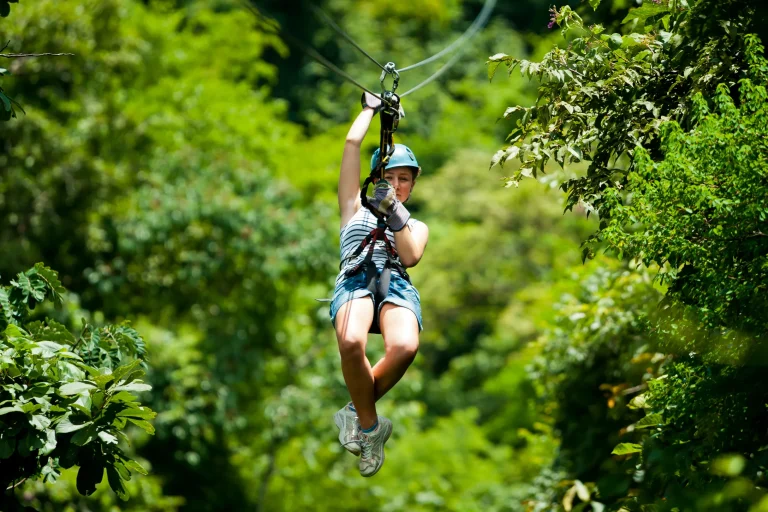
You’ve probably heard the theory that wind is the one thing that can shut down a zipline faster than rain, but is it really true? You watch the guides glance at an anemometer, then up at treetops and flags that snap and flutter. You hear the cable hum shift in pitch as gusts hit, and you feel your harness tug like a seatbelt on a bumpy road. If the numbers creep toward the limit, what happens to you next?
Key Takeaways
- “Too windy” usually means sustained winds near 20–30 mph, or stricter company limits, especially when gusts spike about 10 mph higher.
- Guides verify conditions with an on-site anemometer, plus radar and visual cues like treetops and flags, not just weather apps.
- Wind changes ride behavior: crosswinds swing riders, headwinds can stall progress, and tailwinds raise approach speed requiring stronger braking.
- Tours pause when sustained winds approach limits or gusts become erratic; operations resume only after managers confirm calmer, consistent readings.
- When paused, guests may wait on platforms or return safely; staff can retrieve stuck riders and offer rebook/refund if wind persists.
Zipline Wind Limits: Sustained, Gusts, and Direction
When the treetops start hissing and the cable gives off a low hum, wind stops being background noise and becomes the main safety check. Most courses post wind limits, and you’ll often see sustained winds capped around 20 to 30 mph. Push past that and temporary closures make sense, because the air can shove you off line and make braking feel twitchy. Company safety limits can be stricter than posted. If conditions don’t meet safety thresholds, operators typically pause tours and may wait out the squall or rebook you under their weather policies.
Gusts can be the real curveball. If gusts jump 10 mph over the steady number, you can bounce and swing like a pendulum. Wind direction also changes the ride. Headwinds can stall you short of the platform. Tailwinds can send you in hot. Crosswinds add sideways wobble. An on-site anemometer keeps the numbers honest.
How Guides Decide to Pause a Zipline Tour (and What You’ll Do Next)
If the breeze starts to boss the cables around, your guides don’t guess and they don’t gamble. They watch an anemometer for real-time readings, check local radar updates, and scan treetops and flags. They also compare those numbers to ACCT-aligned limits from testing. When sustained winds climb toward safety thresholds, or gusts turn jumpy and hard to predict, they’ll pause the tour. You’ll wait on platforms or head back to the Pavilion, depending on where you are and what the team can move safely. If someone is out on a line, anti-rollback trolleys and trained retrieval steps are ready. Our systems also use backup safety lines as part of the harness-and-connection setup to add redundancy. Tours restart only after managers confirm calmer numbers and staff re-check lines, anchors, and trolleys. If wind won’t cooperate, you’ll choose to rebook or refund.
What Windy Ziplining Feels Like: Speed, Sway, and Braking
Although the line looks like a simple steel runway, wind turns your ride into something you can feel in your shoulders and stomach. Up to 50 feet high, a steady push and gusts make your trolley hum and your harness sway sideways. You may even rotate a little, like a weather vane that forgot its job. Wind bumps your speed, so a normal 20 to 30 mph glide brings more apparent wind on your face and cable song. Tour operators rely on active braking systems to add controlled stopping power when wind bumps speed near the landing.
Wind at 50 feet makes the trolley hum and your harness sway, turning a 20–30 mph glide into cable song.
- Crosswinds tug your hips and challenge alignment.
- Headwinds can slow you, and guides may pull the line.
- Sudden gusts can bounce the trolley into a pendulum.
- End platforms deliver stronger braking, often guide-assisted.
That braking feels firm but controlled still every time.
Frequently Asked Questions
What Should I Wear for a Windy Zipline Tour?
Use a layering strategy: start with thermal baselayers and quick dry fabrics, add elastic cuffs, then a windproof jacket. Wear sturdy footwear, skip loose hats for secure headwear, and bring hand protection like thin gloves.
Are Refunds Guaranteed if Wind Cancels My Scheduled Tour?
Like kite-string snapping, yes, if wind cancels your tour, you’re guaranteed refund per booking policies. You may choose credit vouchers or rescheduling options; mind cancellation windows, nonrefundable deposits, operator discretion, force majeure, third party insurance too.
Can Children or Lighter Riders Zipline Safely in High Winds?
You can’t count on safe high-wind ziplining for kids; child safety depends on weight limits, harness fit, seat belts, and anchor points. Guides enforce wind thresholds using operator judgment, and may switch to alternate rides.
How Far in Advance Will I Be Notified About a Wind Delay?
Better safe than sorry: you’ll get advance notifications 24–48 before if forecasts borderline; otherwise expect last minute updates at check-in from weather monitoring and time triggered alerts. Guest communication reflects operator responsiveness and cancellation policy.
Does Wind Affect Photos, Phones, or Securing Personal Items?
Yes, wind affects your photos and gear: you’ll fight camera shake, screen glare, wind noise, and possible lens fogging. Avoid loose straps; use secure pockets, waterproof cases, and expect tripod instability. Only tethered devices stay allowed.
Conclusion
You came to fly through treetops, not audition for a kite. If wind hits the limit, guides check the anemometer, scan radar, and watch flags snap like impatient fingers. Gusts can shove you sideways and make the cable sing. So they pause the tour, clip you in, and move you to a calm platform. You’ll hear a brake squeal, then quiet. You reschedule or refund, and you keep your eyebrows.