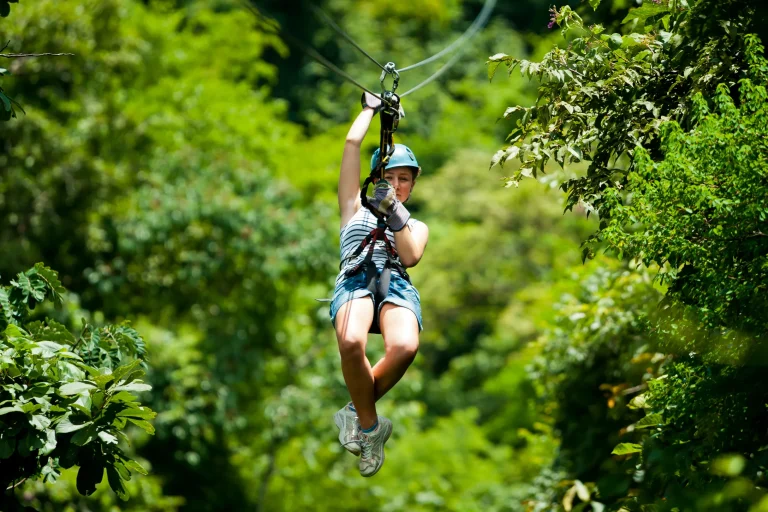
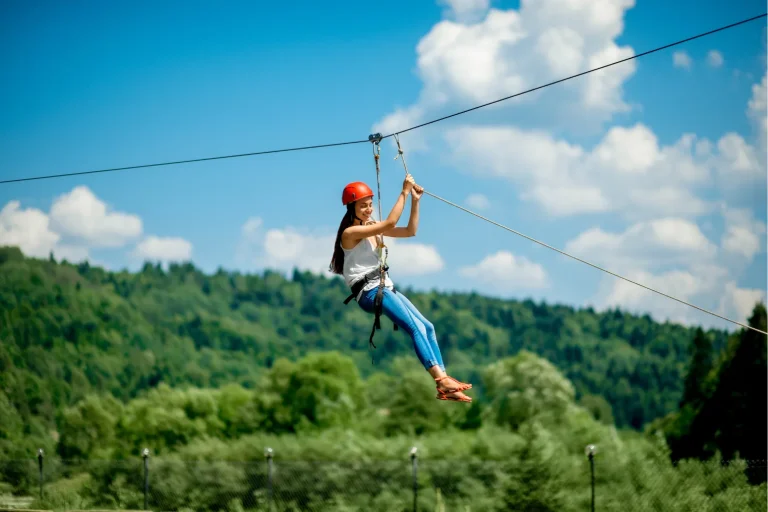
Is that “80 mph” zipline claim mostly marketing, or will you actually feel like you’re flying? You’ll clip into a harness, hear the trolley clack onto the cable, and push off into a steady glide that often lands around 25 to 35 mph. The line hums under you and the wind tugs at your sleeves. Then a brake grabs and the speed story changes fast. So what makes one run feel tame and the next feel wild?
Key Takeaways
- Most zipline tours feel like 25–35 mph, with many runs peaking around 25–40 mph.
- Some commercial ziplines advertise 40–60 mph on faster sections, but those speeds aren’t typical for every line.
- Specialty and record setups can approach 80 mph, yet these are rare and purpose-built.
- Speed varies by rider weight, line steepness and length, wind direction, and equipment drag from the trolley and harness.
- Braking systems (springs, magnetic, friction, or ZIP STOP) slow riders in stages, so the ride ends controlled, not “crash-fast.”
How Fast Do Ziplines Go (Typical Speeds)?
If you’re picturing a slow glide through the treetops, most ziplines will surprise you. On a typical zipline tour, you’ll clip in, hear the trolley hiss, and launch into 25 to 35 miles per hour. It feels like cool air on your cheeks and a buzz in the cable. Many parks brag about those numbers because they’re fast enough to make you laugh midflight. Strong trained guides also make a big difference in how safe and smooth that speed feels from launch to landing.
Some runs step into high speeds, and you might see 40 to 60 mph posted on the sign at the platform. A few specialty rides go wild, with reports near 80 mph. Don’t worry. Operators use braking systems and clear weight limits so your landing stays smooth, not slapstick. Bring gloves if you want sting-free hands when gripping the strap.
What Affects Zipline Speed: Weight, Slope, Wind, Length?
Because every zipline is a little physics party in the woods, your speed changes with the details you can feel the moment you clip in. If you’re heavier, gravity pulls harder, so you often glide faster, which is why operators post weight ranges like 50 to 275 pounds. The line’s slope matters even more. A steeper drop builds quick acceleration, turning a mellow 25 to 30 mph cruise into 40-plus on long runs. Wind plays referee. A tailwind gives you a push, while a headwind or crosswind can slow you and may pause rides. Length and shape count too. Long, straight, steep cables let you settle into a smooth, heart pumping rush with unforgettable views. Your trolley and harness angle add drag, trimming speed. Even on faster runs, operators use backup brakes and secure harness systems to control and stop riders safely.
How Do Ziplines Slow Down and Stop Safely?
Even when you come in hot with the cable humming above your helmet, the stop at the far platform isn’t a guessing game. On a commercial zip line, the end section is built to bleed off energy in stages. You might hit a spring or bungee brake that stretches with a firm tug. Some lines use magnetic eddy-current brakes, so you feel a smooth, quiet drag instead of a slam. Others rely on friction blocks in the pulley path.
If someone does end up stranded mid-line, trained staff follow rescue procedures to reach them and bring them in safely.
Many tours add a ZIP STOP style device that self-regulates, then a guide backs it up with a hand tether or a final catch. Brakes are tuned for your weight range, wind, and daily checks. That’s how FAST DO ZIPLINES still finish politely every time.
Zipline Speed Examples: 30–40 Mph Tours Vs 80 Mph Record
Once you know the braking system will bring you in smoothly, the next fun question is how fast you’ll actually fly. On most commercial tours, you’ll peak around 25 to 40 mph, and many lines feel like 30 to 35. You hear the trolley buzz, feel wind press your sleeves, and watch trees slide by in stripes.
Understanding active braking versus passive braking can also explain why some tours let you carry more speed before slowing you down near the platform.
Speed changes with your weight, the cable’s angle, the length, and even morning drizzle. Your friend might coast while you rocket. If the zipline is located on a long, steep ridge or a dual line, you can touch the top end. Records are wilder. The ZipCoaster in Ras al-Khaimah reports near 80 mph. Still, the thrill is how fast you accelerate when you ride the zipline.
Frequently Asked Questions
What Should I Wear to Stay Comfortable at Higher Zipline Speeds?
Wear breathable layers and a windproof jacket so you stay warm without flapping. Choose long pants and grippy closed-toe shoes. Secure hats, sunglasses, and jewelry, and add thin gloves for braking comfort on fast runs.
Can I Bring a Phone or Camera, and How Do I Secure It?
Like a kite in a gale, your phone can fly off, so you can bring it only if the operator allows. Use waterproof cases on a locking tether, mount it to chest/wrist, and trigger remote shutters.
Are There Minimum Age or Height Requirements for Faster Ziplines?
Yes, operators set age limits and height minimums on faster lines so you can follow instructions and keep harness fit. You’ll face weight limits, and wind may tighten rules or sometimes pair you with an adult.
How Do Dual Race Ziplines Determine Who “Wins” the Run?
May the best rider win: you win when your trolley reaches the finish sensor first. Operators use synced releases, but your reaction time and starting technique still matter, it’s weight, position, and line tuning too often.
What Happens if I Panic or Want to Stop Mid‑Zip?
If you panic or want to stop mid‑zip, you won’t have to. You follow the panic protocol, keep your hands placed, and let guides trigger emergency braking at the next platform with backup catches safely.
Conclusion
You won’t hit movie speed on most tours, but you will feel the line sing under your trolley and the wind tug your sleeves. You glide around 30 to 40 mph, then the brake spring grabs and eases you onto the platform. Your weight, the slope, and a gusty ridge all change the pace. Faster or slower, you chase the same thing: that bright, breath-stealing whoosh. Below, pine tops blur and your guide grins too.