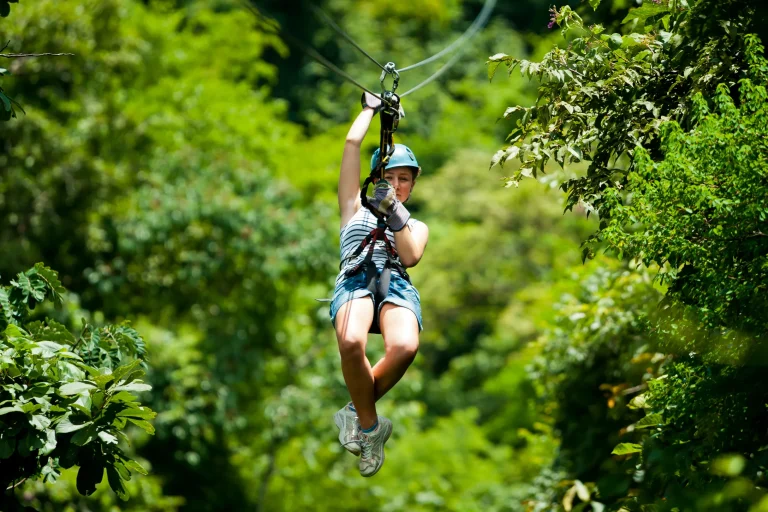
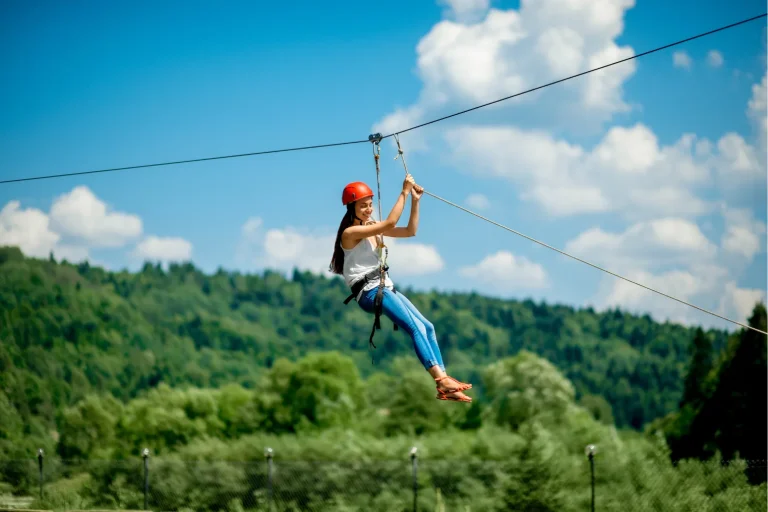
Most first-time zipliners panic more from the platform pause than the ride itself. Up there, your brain clocks the drop and starts writing worst-case stories. You can interrupt that fast. Slow your exhale, tug-test your clips, and lock your eyes on the far landing not the canyon below. Press your boots into the deck. Solid. Then step off and let the first few seconds settle. The surprise is what happens next…
Key Takeaways
- Ziplining usually feels scariest at the step-off; most people calm down within seconds once they feel the harness fully holding.
- Look at the landing platform or treetops, not the drop, your gaze steadies balance and reduces the “void below” panic.
- Exhale hard at launch, then breathe in a steady cadence (inhale 4, exhale 6) to downshift adrenaline and tension.
- Use grounding cues: press boots into planks, tap the carabiner, notice harness pressure, and keep hands light on the lanyard.
- Reduce worry by confirming safety basics: redundant clips, tug-test carabiners, ask how braking works, and stay clipped in until “all clear.”
Is Ziplining Scary With a Fear of Heights?
If you get wobbly just looking over a balcony, ziplining can feel intimidating at first, but it’s often less scary than you expect. You’re clipped in, you step off, and the ride quickly turns into wind, speed, and a loud whoop you didn’t plan.
If heights spook you, manage your visual exposure: keep your eyes on the far platform or the treetops, not the drop below. Try cognitive reframing, meaning you rename the sensation. That stomach-flip becomes “adrenaline,” not “panic.” Before you launch, do a slow inhale for four counts, then exhale for six. Ask for the first slot only if waiting ramps you up. Start with a shorter, lower line if you can. Tiny wins add up. Keep your hands loose. Smile anyway. Your guides also use pre-ride coaching and steady, step-by-step cues to keep nervous beginners comfortable.
Zipline Safety: Can You Fall?
You can fall on a zipline, but reputable operators make it very hard by clipping you into a harness (the snug belt-and-leg straps) and a tether (the short safety line), often with redundancy so two connections back you up.
Many North Shore courses also rely on backup braking systems, along with harnesses and redundant connections, to keep stops controlled and riders secure.
Next, you’ll look at the braking system, spring brake, hand brake, or auto-stop, and the backup plan if you come in fast, because that’s where a smooth ride can turn into a jolt.
Still, the real risks usually come from the basics: loose straps, missed clips, worn gear, or you trying to “help” with your hands when you should just ride.
Harnesses, Tethers, And Redundancy
While the view might make your knees wobble, the gear doing the real work sits snug at your hips and thighs. You’ll clip into a full-body harness that spreads pressure like a good backpack. Before you step off, ask for a quick harness inspection: buckles flat, straps doubled back, no twists. Then look at your connection. Most tours use tether redundancy, meaning two separate lanyards (short safety straps) or two carabiners (metal clips) share the job if one fails. You should feel the webbing hug your legs, not pinch, and you can tug-test each clip yourself before launching. If you feel numbness, sharp pinching, or any strap riding up into your groin, speak up, those are comfort cues that the fit needs adjusting.
| What you notice | What it helps you feel |
|---|---|
| Tight, even straps | Grounded, not dangling |
| Two attachment points | Calm, because there’s a backup |
Breathe. Check. Then ride.
Braking Systems And Backups
Once you’re rolling, the question isn’t “Can you fall?” so much as “How do they stop me, every single time?”
Good tours don’t rely on your grip or bravery for braking. Instead, you glide into a springy catch or a padded platform where staff control your speed.
Look for a dual brake: two independent methods, like a friction block plus a mechanical brake, so one isn’t doing all the work. Some systems use active braking that adjusts resistance during the ride, while passive setups rely on fixed components at the end. You may also see backup clamps, extra devices that grab the cable if anything slips.
Ask where the braking happens and who triggers it. You should hear clear calls, feel a smooth slow-down, and end with your feet under you. No drama. Just a tidy stop. If you’re unsure, ask for a demo first.
Still comparing How Scary Is Ziplining? Fear Of Heights Tips That Actually Help?
Ask for tour ideas, hotel suggestions, or a simple trip plan that combines both.
Trip Helper
Common Fall Risk Factors
Even if the gear looks space‑age and the views feel like a screensaver, most “fall” risks on a zipline come from a handful of predictable weak spots. You don’t usually drop from the cable; you slip into trouble when steps get skipped. Think loose harness straps, a carabiner (the metal clip) not fully locked, or a platform shuffle that turns ankles. Clear pre-ride briefings from experienced guides also reduce mishaps by catching fit issues and enforcing platform rules before you launch.
| Risk factor | What you can do |
|---|---|
| Equipment maintenance gaps | Ask when cables and trolleys were last inspected. Walk away if staff gets vague. |
| Weather effects | Wind and rain change speed and braking. If conditions feel spicy, reschedule. |
Stay clipped in until you hear “all clear.” Keep hands on the lanyard, not the cable. Watch your footing on decking, and let guides position you.
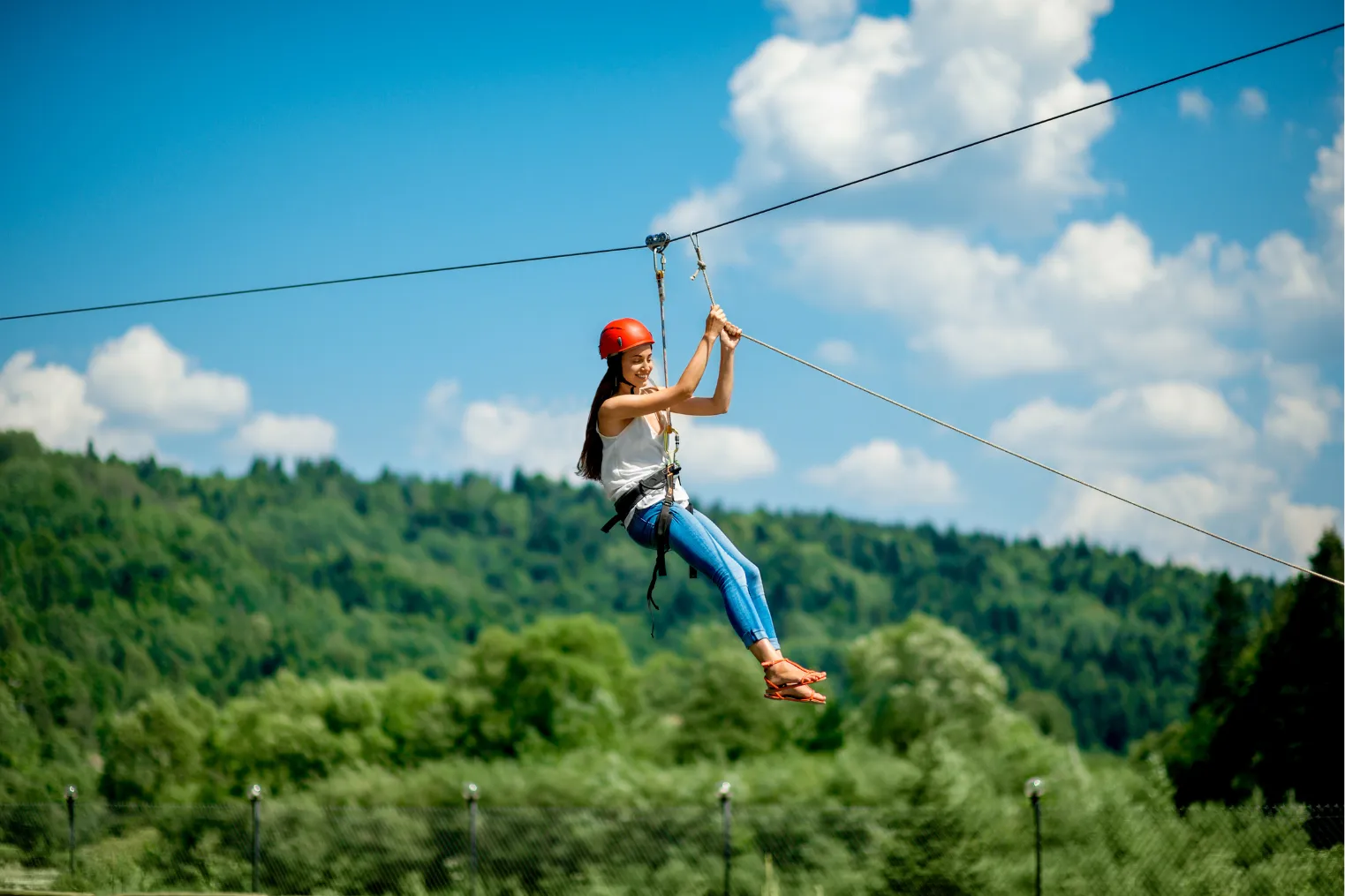
What Ziplining Feels Like in the First 10 Seconds
The first 10 seconds of a zipline hit fast, like your brain has to catch up with your body. You step off, the harness takes your weight, and that initial jolt zips through your knees. Then: wind in your ears, metal humming, treetops rushing. It’s sensory overload, but you can steer it. Most tours start with a brief check-in and a safety briefing before you ever step off the platform.
- Exhale hard once as you launch, it signals “safe” to your nervous system.
- Keep your eyes on the far platform, not the drop, to steady balance.
- Relax your hands on the tether, white-knuckling makes every vibration louder.
Your stomach may float, like a quick elevator dip. Let your legs hang loose. Count to ten. You’re already moving. If you feel shaky, say what you see out loud. It keeps your mind present.
Why It Gets Easier After Takeoff
Right after you step off the platform, your adrenaline (your body’s quick “fight or flight” boost) spikes, then it starts to drop as you realize you’re safely clipped in and the cable’s doing the work.
A steady rhythm kicks in. You match your breathing to the glide and the small hum under your feet. Soon your focus shifts from “Am I okay?” to the motion itself, the wind on your face, the trees sliding by, and the ride feels simpler. If a camera catches you mid-ride, keeping a relaxed posture and avoiding a death-grip on the handle helps create natural-looking zipline photos that match how calm you start to feel after takeoff.
Adrenaline Peaks Then Drops
Once you step off the platform, your adrenaline spikes hard and fast, then starts to fade within seconds. Your stomach lurches, your hands clamp the trolley, and your brain yells “too high.” Then the cable catches you and the air smooths out. You’re moving, not falling. That shift triggers peak recovery, when your body stops sounding the alarm and you can actually look around. A clear safety briefing in plain English helps you trust what the guides are asking you to do and why it keeps you secure.
- Fix your eyes on the far platform, a clear target.
- Exhale long, like fogging a window, to slow your pulse.
- Wiggle your toes and loosen your shoulders to break the freeze.
In the adrenaline aftermath, noise feels sharper and wind feels cooler, but your thoughts get quieter. You start to enjoy the glide. Let the harness hold you. Trust it.
Body Learns The Rhythm
Set a breathing cadence to match it: inhale for three counts, exhale for four. Keep your tongue relaxed and your shoulders heavy. If your hands cramp on the trolley strap, loosen one finger at a time and re-grip. Tiny resets.
On North Shore, a quick 10-minute confidence plan before your first run helps your body lock onto that rhythm faster.
Soon your heartbeat syncs with the glide, and the early spike feels like a story you already finished. Even skeptics admit the second half feels calmer, almost routine.
Focus Shifts To Motion
Lean into the glide, and you’ll feel your brain swap panic for plain physics. Once your wheels hum and the cable sings, your eyes stop measuring the drop and start tracking the line ahead. That’s motion focus: you pay attention to speed, wind, and where you’re going, not the empty air below. Before you launch, a quick pre-ride safety briefing can calm your nerves by making the process feel predictable.
- Fix your gaze on the landing platform, not your feet.
- Breathe out long as you pick up pace. Count to four.
- Notice the harness pressure and the cool air on your hands.
After a few seconds, vestibular adaptation kicks in. Your inner ear, the balance sensor, recalibrates to the steady movement. The ride turns from “What if?” to “Whee, okay.” If you tense up, wiggle your toes and let your shoulders drop.
Height vs Speed: What Triggers Fear of Heights Most?
Although you might blame the speed, most zipline jitters start with height, because your brain reads “empty space below” as risk long before you even launch.
Up on the platform, your visual perception does the math fast: tiny trees, toy cars, a river that looks like ribbon. That scale mismatch can spike your pulse. Speed comes later, and it often feels cleaner. Once you roll, wind noise and a straight line create speed cues that say “moving forward,” not “falling.” Your stomach may flutter, but the harness holds you like a seatbelt.
The real trigger is when you look down and imagine dropping, even though you’re clipped in. So if you feel scared, it’s normal. It’s height talking. More than the zipline’s rush ever.
Most tours label rides as easy, moderate, or advanced, and the higher-rated ones can amplify that “empty space below” feeling even before you launch.
Fear of Heights Tips Before You Go Ziplining
Before you even book a tour, stack the odds in your favor by choosing a zipline that matches your comfort level, not your bravado. Look for shorter lines, lower towers, and a smooth “sit-harness” option so your legs don’t wobble in empty air. Read recent reviews for notes on guides, braking style, and how steady the walk to the first tower feels.
If you’re booking close to your trip date, use same-day and next-day options to snag a calmer, beginner-friendly course before it sells out.
- Pack thin gloves for grip and less sweaty palms
- Practice breathing techniques: inhale 4, exhale 6, repeat
- Do visualization exercises: picture the ride, then picture the finish
The night before, skip heavy booze and chase sleep. Eat a simple breakfast, hydrate, and arrive early so you’re not rushing. Fear hates deadlines. If you can, try a low ropes course first to calibrate.
Fear of Heights Tips on the Launch Platform
You’ve done the prep, you’ve checked in, and now you’re standing on the launch platform with a harness snug at your hips and the wind tugging at your shirt. Your brain may shout “too high.” Don’t argue with it. Do breathing exercises instead: inhale for four, hold for two, exhale for six, and let your shoulders drop.
Next, use tactile grounding, which means anchoring your attention in what you can feel. Press your boots into the planks. Tap the carabiner with a finger and notice the cool metal. Keep your eyes on the platform edge, not the drop. Ask the guide to talk you through the clip-in step by step. When you’re ready, say so out loud. That tiny decision feels big right now.
If you arrived with enough buffer time, you can slow down here without feeling rushed through the clip-in and launch.
Fear of Heights Tips While You’re Ziplining
Once you’re off the platform and the line starts to hum, your fear can spike for a second because there’s nothing left to “hold onto” but your gear. Let that jolt pass. Keep your hands light on the strap, not death-gripping it, and let the harness do its job. Use breathing techniques: inhale for four counts, exhale for six, so your body gets the message you’re safe. Try visualization exercises too. Picture the cable as a steady track and your body as a calm passenger. If you’re prone to nausea or lightheadedness, ziplining can sometimes trigger motion sickness because of the speed and shifting visual cues.
When the line starts to hum, let the fear spike pass, hands light, breathe slow, and let the harness carry you.
Then give your senses a simple task.
- Spot three colors in the canopy.
- Listen for wind and pulley clicks.
- Wiggle your toes, then relax your shoulders.
Halfway through, you’ll likely start enjoying the glide. It’s faster than your thoughts.
When to Skip Ziplining or Pick an Easier Course
Riding out that midair jolt can feel empowering, but some days the smartest move is choosing a gentler line or sitting the whole thing out. If you’re shaky before you clip in, listen up: panic can tighten your grip and mess with braking, the simple hand motion that slows you at the end.
Skip the run if you’re sick, hungover, or rattled by wind, rain, or lightning. Even on North Shore tours, weather policies often mean you’ll still zip in light rain, but high winds or lightning can pause or cancel the run. If you still want the view, ask for shorter routes, lower towers, and shaded platforms where you can breathe, sip water, and watch others launch. Tell the guide you need an exit option, then practice on a training line first. No shame. A calm glide beats a white-knuckle blur. Walk away, stretch, and try again tomorrow instead.
Frequently Asked Questions
What Should I Wear for Ziplining in Hot, Cold, or Rainy Weather?
For hot days, you’ll wear light layers and breathable fabrics with sun protection. For cold rides, you’ll add insulating baselayers. In rain, you’ll pack a waterproof jacket. Always choose grippy footwear so you’re on platforms.
Can I Zipline if I’M Over the Weight Limit or Near It?
Funny coincidence, you’re asking right before you book: you can’t zipline over the posted limit, and near it you should call ahead. Weight exemptions are rare; harness adjustments or tandem rides depend on operator liability always.
Will Motion Sickness or Vertigo Make Ziplining Worse?
Yes, vertigo or motion sickness can make ziplining feel worse, especially if you already have balance issues. You’ll cope better if you eat lightly, hydrate, focus ahead, and choose shorter, calmer runs with planned breaks.
Is Ziplining Safe During Pregnancy or With Recent Injuries?
You shouldn’t zipline while pregnant unless your doctor clears you and operators follow pregnancy precautions. With recent injuries, postpone until injury recovery is complete, avoid hard landings, and choose gentle courses or skip it entirely.
How Do I Choose a Reputable Zipline Operator Before Booking?
Like Odysseus choosing a safe mast, you’ll pick a reputable zipline operator by reading operator reviews, confirming guides’ training, demanding certification checks, reviewing safety records, and calling with questions; if they dodge details, don’t book.
Conclusion
You’ll feel the wobble on the platform, then the line hums and your stomach lifts for a beat. Breathe out slow, lock your eyes on the landing, and press your boots into the deck. Tug-test your clips and ask about daily inspections. Start with a shorter run if you can. After ten seconds your balance system settles and the view takes over. Bite the bullet then glide. If panic won’t budge, choose a lower course.